Climate Change in Ethiopia — an overview
From the Green Legacy planting drive to the Long-Term Low Emission and Climate Resilient Development Strategy, Ethiopia’s climate response is built on science, sectoral coordination, and a long-term net-zero pathway.
A measurably changing climate
Why this matters for Ethiopia
Climate change is a long-term shift in temperature and weather patterns. In Ethiopia, these shifts touch the livelihoods of the majority of the population, because the economy and food systems depend heavily on climate-sensitive sectors.
Climate-related droughts and rainfall irregularities contribute to macroeconomic losses estimated at 1–4% of GDP during severe events. Mitigation and adaptation are not only environmental priorities — they are essential for economic survival, food security, and social stability.
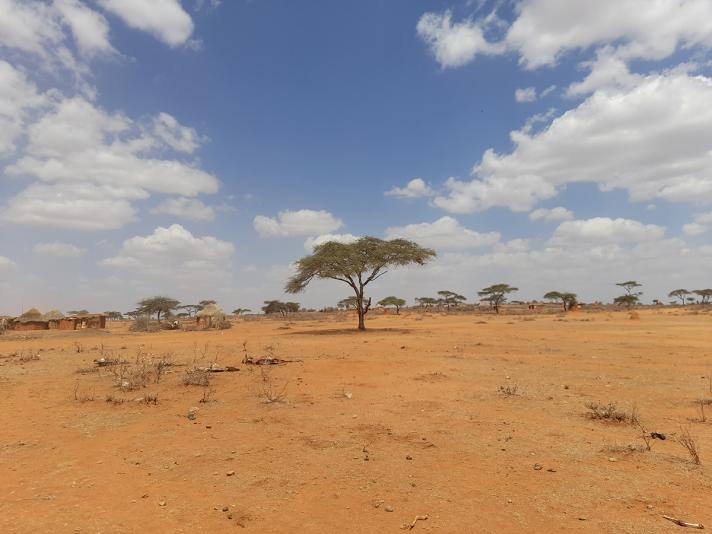
Drought affecting the livestock of Borana zone — a snapshot of climate vulnerability on Ethiopia’s pastoral lowlands.
Restoring Ethiopia’s highlands
Improving soil health, conserving biodiversity, restoring degraded lands, and strengthening watershed functions — one programme working on both sides of the climate equation.
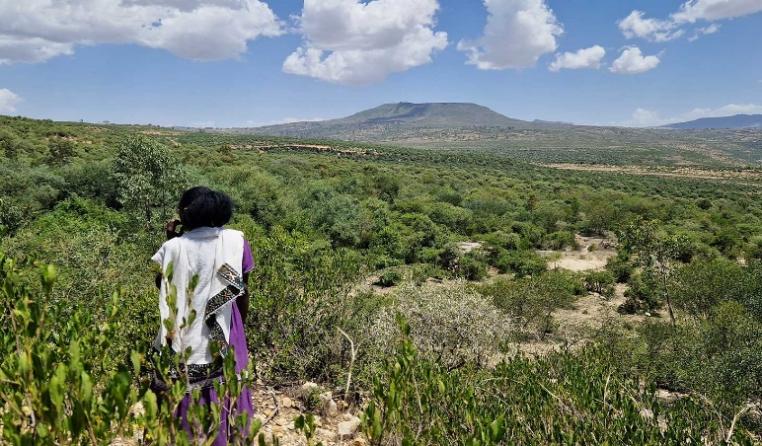
A restored highland under Ethiopia’s Green Legacy programme. Forest cover has grown from ~17% in 2019 toward the national 30% target.
Adaptation
Resilience to drought, reduced erosion, and improved water retention — keeping climate-dependent agriculture productive even as conditions shift.
Mitigation
Enhanced carbon sequestration through improved vegetation and forest cover — every restored hectare contributing to the national emissions reduction pathway.
Livelihoods
Restoration directly supports the majority of Ethiopians whose livelihoods depend on climate-sensitive agriculture and pastoral systems.
From CRGE to NDC 3.0 — the policy ladder
A continuous arc of national initiatives, each building on the one before, sharpening ambition and strengthening implementation.
Climate Resilient Green Economy (CRGE) launch
Ethiopia launched CRGE with the objective of reaching middle-income status by 2025 while pursuing development pathways with no net increase in greenhouse gas emissions — the founding national climate strategy.
NAP-ETH — National Adaptation Plan
Ethiopia’s National Adaptation Plan translates climate risks into prioritised action through 18 adaptation options, coordinating efforts across sectors and levels of government.
18 prioritised adaptation optionsGreen Legacy Initiative (GLI)
A national restoration and greening programme. Ethiopia has planted more than 48 billion seedlings; forest coverage has risen from about 17% in 2019 to about 23.6% today, advancing toward the national goal of 30%.
48B+ seedlings planted 17% → 23.6% forest coverLT-LEDS — Long-Term Low Emission Development Strategy
A 30-year roadmap aligning policies, investments, and climate planning with long-term mitigation objectives — shifting development toward low-emission, climate-resilient pathways while supporting economic growth.
Updated NDC 2.0
Ethiopia’s enhanced climate action plan: strengthened mitigation targets, sharper strategies, and improved implementation arrangements across sectors, with progress tracked through MRV and coordination mechanisms.
Green Mobility Transition
Accelerating the shift to cleaner, low-emission transport. Led by the Ministry of Transport and Logistics through coordinated public events, partnerships, and technology showcases reducing reliance on conventional fuels.
NDC 3.0 — the next decade
Ethiopia’s third Nationally Determined Contribution, aligned with the long-term development vision. NDC 3.0 raises mitigation ambition and lays the implementation track for the 2025–2035 period.
Currently being implementedWhat Ethiopia has committed to
Under NDC 3.0 (2025–2035) and the Long-Term Low Emission Development Strategy.
of Ethiopia’s electricity comes from renewable sources. Regional interconnection and clean energy development are central to sustaining low-carbon growth.
Where adaptation lives
Ethiopia’s adaptation priorities are grounded in practical sectoral needs.
Water
Integrated watershed management, improved retention, drought-risk reduction.
Agriculture
Drought-resistant crops and climate-smart production systems.
Health
Strengthened surveillance for climate-sensitive diseases.
Transport
Resilient infrastructure planning and low-carbon mobility options.
Who coordinates climate-resilient development
Ethiopia’s climate governance architecture is guided by the CRGE Strategy, the National Adaptation Plan (NAP), Nationally Determined Contributions (NDCs), and the LT-LEDS — coordinated through a central hub and a multi-ministry mesh.
Ministry of Planning & Development
Mandated under Proclamation No. 1263/2021 to integrate climate change into national development planning — CRGE implementation, NDC coordination, monitoring, and policy alignment.
Sectoral coordination — ministries with dedicated climate units
Dive deeper into Ethiopia’s climate work
Explore national indicators, climate projects, policy documents, and recent news.
National Indicators Climate Projects Resources Library